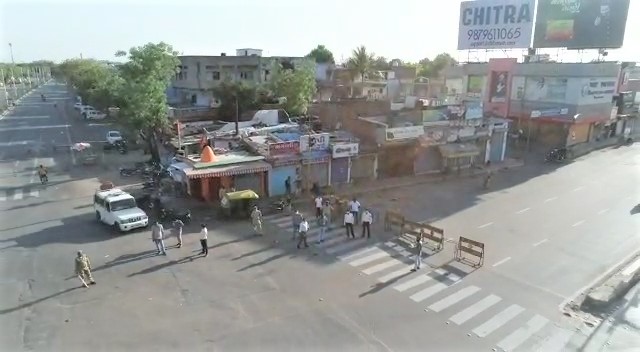
To contain the spread of the corona virus, Prime Minister Narendra Modi of India announced a 21-day lock down of the entire nation, of 1.339 billion people, on March 24, 2020, giving only hours for the nation’s citizens to prepare. You can read all about it online on how it was difficult. But I want to share here today how the Prime Minister used it’s biggest weakness – the population as its biggest strength to contain the spread of the virus. Sure, it is going to have an impact on the economy, but humanity is top of mind for all good leaders right now, of which PM Modi makes the top of my list currently.
India is a country that thrives on social interaction, be it work or home. Focus on people and society has always been key for India. That is in line with India being the largest democracy in the world where more than 1.339 billion people elect their leader every five years. India is well known for its diversity in cultures, languages, traditions, religions and festivals with its hospitality being the common denominator across all factors – that’s where the country stands united. India’s strong religious views are a BIG social connector where hundreds of millions of people make time to visit their places of worship EACH day where they connect with each other. Standing with each other in trying times or community first, be it the third generation cousin or a neighbor from a different state/religion or even someone unknown is all in a day’s work. I remember breaking my neighbor’s glass window as a kid while playing cricket in a common plot and she brushed it off with a small grin. A fight or complaint didn’t follow because ‘hey, where would neighborhood kids play?’ or ‘Yeah, so? What if it was my child?’. On numerous accounts when I visited India after moving to the US, my neighbors, extended family and friends made time to entertain with me, even if it was weekdays. My then boyfriend, now husband’s cousin came to rescue when I didn’t know where to find something or who to go to, even during work hours. My colleagues working in India office treated me to some fancy food or brought thoughtful presents, even if I was meeting them for the first time.
In such a hospitable environment, where people’s social instincts take over their daily routines, a lock down would really mean kids not playing outside, people not going to work, no traveling, no religious gatherings for days together. Something the country or the world has never faced before. But I am really intrigued how the lock down is playing out and embarrassed too that we didn’t do the same here in the US. Now, before I dive into that, let me indulge you with some stats here. India’s population density is 420/km2 compared to 34/km2 in the United States; with one of the largest slum area living with a density of 277,136/km2. Yes, you read that number right! India is also fighting against poverty which has almost halved between 2005–06 and 2015–16, declining from 54.7% to 27.5%, but there is still a long way to go before every single individual can claim access to basic sanitation, clean water, food and shelter despite PM Narenda Modi’s best efforts. To add to that, about 343 million people are still illiterate (based on the 74.37% literacy recorded by UNESCO in 2018).
So while India may be home to some of the world class health facilities and health technologies, it still also only has a 0.78 per 1000 physician density and at hand there are over a billion people to save from the spread of the virus. In short, for India, Prevention is not just better than cure; Prevention is the only way! This message has been made clear to almost 100% of the population and I would like to share some real life stories of people experiencing the groundwork done to accomplish this from different cities — all of which I have spoken to personally in the past week.
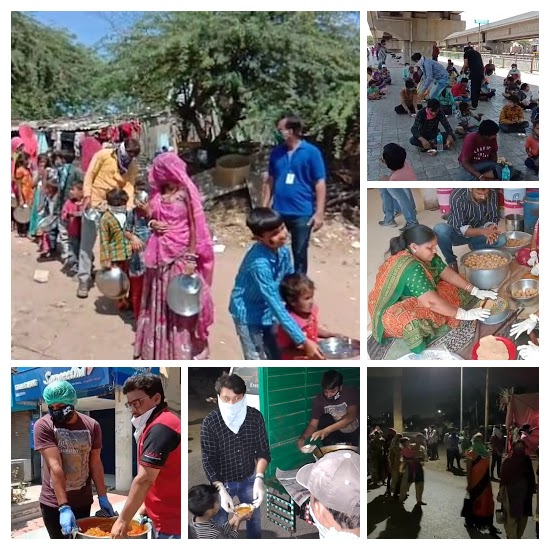
Ahmadabad, Gujarat: Let me start from my hometown, Ahmadabad, Gujarat where some of the strictest measures have been put in place. Whilst Offices, stores, places of worship have been shut down compulsorily everywhere in the country, movement of the locals here is also extremely restricted, especially if they traveled from outside recently. My father in law, who also serves on the board for their community, was made to sign an agreement with the officials to not allow a guy to leave his home for the next 14 days. This person had recently arrived from London and had shown no signs of sickness. But that didn’t matter. A friend of mine is making and delivering more than 1500 meals in an official charity to take care of the homeless and the daily wage workers who don’t earn right now, only with an official permission from the govt. As of April 5, as India enters Stage 3 of the spread, their organization was asked not to move around for their own safety. Instead, they allocated two individuals to help them coordinate delivery of food. Commendable! Many such grass root level facilities have been setup to ensure enough supply of medicines, food and essentials across the most needy areas of the city as well as for those who are quarantined for any reason.
Delhi, India: This is India’s capital city and my cousin who is an anesthetist works there in a reputed hospital. According to her a ton of measures have been put in place to ensure safety of women serving in healthcare from sanitation workers to doctors, surgeons, etc. The state has also put extremely strict measures in place: when there is a suspected case of corona, the whole area is sealed down and no one from that community is allowed to step outside. If someone has actually tested positive, a sign is put outside their home so straddlers are aware and exercise caution. All essentials are provided within by only authorized providers with their safety ensured. This applies to all rich and poor communities.
Rajasthan & Madhya Pradesh, India: A few of my relatives live here in various cities and villages, including my parents’ house help who migrated there right after the lock down. All have a consistent experience: Grocery stores have got the 6ft apart social distancing rule applied along with contact-less delivery of items. Additionally, every state, city, village, community and home has curfew in place where no one can enter or exit without getting tested for fever or other symptoms. People are being asked to leave their outer clothes and shoes outside for washing; no exceptions.
Maharashtra, India: Home to a lot of Bollywood celebs as well as the slums, this is one of the most populous states and also one of the most affected in India. While the celebs are safe in their homes, they are using their influence on Television and Social Media to educate the citizens to stay home and active in support of stopping the spread. However, slums are of high concentration and in great danger and the police and healthcare workers are in the forefront here, locking down the areas as much as possible while providing the essentials.
The Prime Minister sitting in Delhi is in frequent contact with the entire nation through television and social media pleading, requesting, commanding and scolding them to stay indoors. As of Apr 5, 2020, only authorized vehicles are allowed on the streets. People on streets without authorization are being charged with felony and jailed. The PM is also spreading education in simple narratives asking citizens to use homemade masks out of cotton cloth if they must step out.
 Working Mom Musing
Leave a comment